
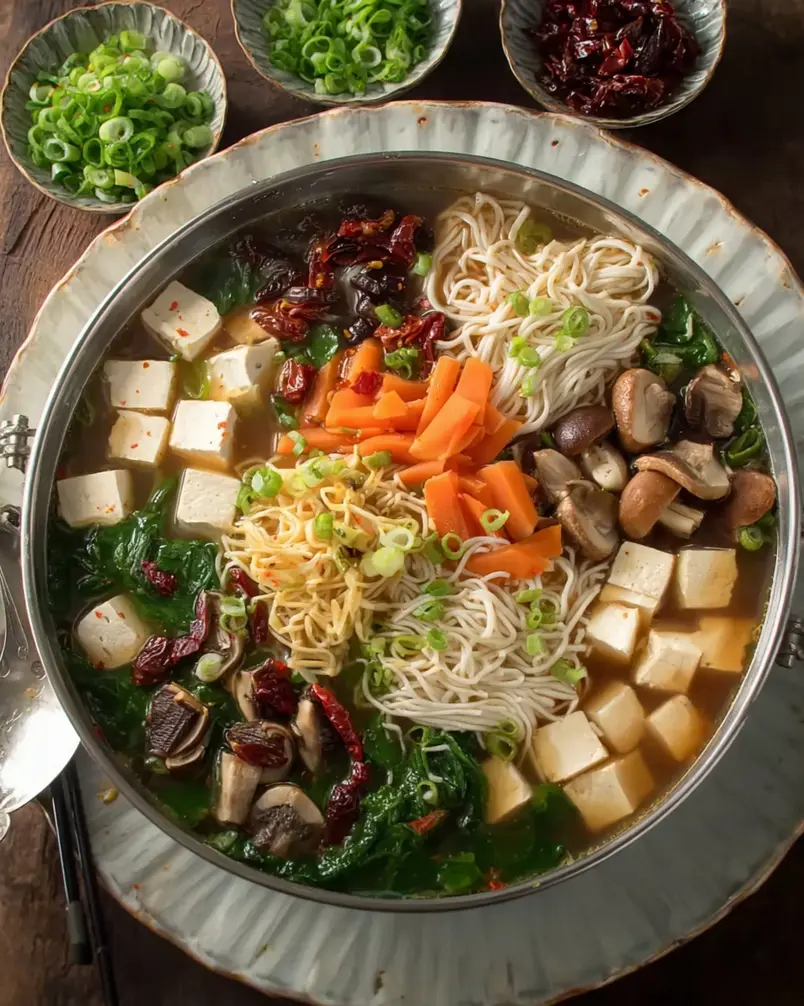
Is it possible that one of the most flavorful and satisfying meals can also be entirely plant-based? Absolutely! Forget the misconception that vegetarian cuisine is bland or boring. Today, we’re diving deep into the world of vegetarian hot pot, a customizable, communal, and utterly delicious dining experience that challenges everything you thought you knew about meatless meals. Whether you’re a seasoned vegetarian or simply looking to add more plant-based options to your diet, this vegetarian hot pot recipe is your gateway to a world of flavorful possibilities.
Ingredients List
* For the Broth:
* 8 cups vegetable broth (low sodium preferred)
* 4 cloves garlic, minced
* 2-inch piece of ginger, peeled and sliced
* 2 scallions, roughly chopped
* 4 dried shiitake mushrooms (for that umami depth – if you can’t find them, a tablespoon of mushroom powder works wonders!)
* 2 tablespoons soy sauce (tamari for gluten-free)
* 1 tablespoon sake or rice wine vinegar (adds a subtle tang)
* 1 teaspoon sesame oil
* Pinch of red pepper flakes (optional, for heat)
* For Dipping:
* Your favorite dipping sauces! (See serving suggestions below for inspiration)
* For the Hot Pot:
* Assorted vegetables:
* Napa cabbage, chopped
* Bok choy, chopped
* Spinach or other leafy greens
* Carrots, sliced
* Mushrooms (shiitake, enoki, oyster – the more variety, the better!)
* Broccoli florets
* Cauliflower florets
* Bell peppers, sliced
* Lotus root, sliced (optional, but adds a delightful crunch)
* Firm or extra-firm tofu, cubed
* Tempeh, sliced (consider marinating in soy sauce and ginger for extra flavor)
* Udon noodles, rice noodles, or glass noodles (your choice!)
* Vegetarian meatballs or dumplings (check ingredients for dietary restrictions)
* Corn on the cob, cut into sections
* Edamame pods
Substitutions: Can’t find dried shiitake? Use fresh or substitute with a teaspoon of mushroom bouillon. Don’t have sake? Dry sherry or even a splash of apple cider vinegar can work in a pinch. Feel free to swap out any of the vegetables based on your preference and what’s in season.
Timing
* Preparation Time: 30 minutes
* Cooking Time: 1 Hour
* Total Time: 90 minutes
Compared to preparing an elaborate traditional multi-course meal, this 90-minute vegetarian hot pot experience is remarkably efficient, allowing you ample time to relax and enjoy the communal aspect of the dish.

Step-by-Step Instructions
Step 1: Prepare the Broth
In a large pot, combine the vegetable broth, minced garlic, sliced ginger, chopped scallions, and dried shiitake mushrooms. Bring to a boil, then reduce heat and simmer for at least 30 minutes (longer simmering = more flavor!). This allows the flavors to meld beautifully.
Tip: For an even richer broth, consider adding a small piece of kombu seaweed. Remove before serving.
Step 2: Strain and Season the Broth
Strain the broth through a fine-mesh sieve to remove the solids. Return the clear broth to the pot. Add the soy sauce (or tamari), sake (or rice wine vinegar), sesame oil, and red pepper flakes (if using). Taste and adjust seasonings as needed. This is your flavor foundation, so make it sing!
Tip: If you want a deeper color and flavor, add a splash of dark soy sauce.
Step 3: Prepare Your Dipping Sauces
While the broth simmers, prepare your dipping sauces. (See Serving Suggestions below for inspiration.) Having a variety allows everyone to customize their experience.
Tip: Prepare at least two dipping sauces – one soy- sauce based and another with sesame oil.
Step 4: Arrange the Hot Pot Ingredients
Wash and chop all the vegetables. Arrange them attractively on platters or in bowls. This makes it easy for everyone to access the ingredients during the hot pot experience.
Tip: Group similar items together (e.g., all the leafy greens in one bowl, all the mushrooms in another).
Step 5: Set Up the Hot Pot Station
Place the pot of broth on a portable burner (electric or gas) in the center of the table. Arrange the platters of vegetables, noodles, tofu, and dipping sauces around the pot. Provide each person with a bowl, chopsticks, and a small strainer or slotted spoon for fishing items out of the hot pot.
Tip: Have separate sets of chopsticks – one for putting raw food into the pot and one for eating the cooked food. This prevents cross-contamination.
Step 6: Cook and Enjoy!
Bring the broth to a simmer. Each person can now add their desired ingredients to the pot and cook them until done. Dip the cooked ingredients into your chosen sauces and enjoy! The beauty of hot pot is that it’s a continuous, interactive meal.
Tip: Educate your guests on cooking times for individual items. Leafy greens only need a few seconds, while tofu and root vegetables take a bit longer.
Step 7: Replenish the Broth
As the broth simmers and ingredients are added, it will evaporate. Periodically replenish with extra vegetable broth to maintain the liquid level.
Tip: Keep extra broth warm on the stove for easy replenishment.
Nutritional Information (per serving, estimated)
* Calories: 250-350 (depending on ingredients and serving size)
* Protein: 15-25g
* Carbohydrates: 30-40g
* Fat: 8-15g
* Fiber: 8-12g
* Vitamins: High in Vitamin A, Vitamin C, Vitamin K, and various B vitamins
* Minerals: Good source of potassium, magnesium, and iron
Data Insight: The exact nutritional profile fluctuates depending on the specific vegetables and noodles used. However, a vegetarian hot pot is generally a low-calorie, high-fiber, and nutrient-dense meal.
Healthier Alternatives for the Recipe
* Lower Sodium: Use low-sodium vegetable broth and reduce or eliminate soy sauce.
* Gluten-Free: Use tamari instead of soy sauce, rice noodles instead of udon noodles, and check the labels of vegetarian meatballs/dumplings to ensure they are gluten-free.
* Low-Carb: Substitute regular noodles with konjac noodles or increase the proportion of vegetables to broth.
* Vegan: Ensure all ingredients, including dipping sauces, are vegan. Check labels for honey, fish sauce, or other animal-derived products.
* High-Protein: Increase the amount of tofu, tempeh, or vegetarian meatballs. Consider adding edamame.
Serving Suggestions
The beauty of hot pot is its versatility! Here are a few dipping sauce combinations to get you started (recipes for each below):
* Sesame Ginger: Sesame oil, soy sauce, grated ginger, minced garlic, chopped scallions
* Spicy Peanut: Peanut butter, soy sauce, rice vinegar, sesame oil, sriracha, a touch of honey or maple syrup (optional)
* Ponzu: Ponzu sauce (citrus-infused soy sauce), grated daikon radish, chili oil
* Mushroom Soy: Soy sauce, sesame oil, mushroom seasoning powder, chopped cilantro, sliced chilies
* Simple Soy: Just plain soy sauce and a dash of rice vinegar!
Beverage Pairings: Consider serving with green tea, sake, or a light-bodied white wine like Pinot Grigio.
Common Mistakes to Avoid
* Overcrowding the Pot: Adding too many ingredients at once will lower the broth temperature and result in uneven cooking. Add ingredients gradually.
* Not replenishing the Broth: As mentioned earlier, the broth evaporates quickly. Keep extra warm broth on hand.
* Undercooking Ingredients: Especially with tofu and root vegetables, ensure they are fully cooked before eating.
* Using the Same Chopsticks: Avoid using the same chopsticks for raw and cooked food to prevent cross-contamination.
* Ignoring Individual Preferences: Hot pot is all about customization! Be sure to cater to everyone’s dietary needs and preferences.
Storing Tips for the Recipe
* Leftover Broth: Store leftover broth in an airtight container in the refrigerator for up to 3 days.
* Pre-Chopped Vegetables: Store pre-chopped vegetables in airtight containers in the refrigerator for up to 2 days. They stay crisper if you line the container with a paper towel.
* Cooked Ingredients: Store cooked ingredients separately from the broth in airtight containers in the refrigerator for up to 2 days. Reheat thoroughly before serving.
* Do Not Freeze: It is not recommended to freeze the broth with the vegetables and cooked ingredients in it.
Conclusion
Vegetarian hot pot is more than just a meal; it’s a communal experience that brings people together over shared flavors and vibrant ingredients. With its customizable nature, health benefits, and endless possibilities, this plant-based feast is sure to become a regular in your culinary repertoire. So gather your friends, prepare your ingredients, and dive into the world of vegetarian hot pot. What is your favorite ingredient for a vegetarian hot pot? Please share your comments below!
FAQs
Q: Can I use water instead of vegetable broth?
A: While you can use water, the flavor will be significantly less complex. Vegetable broth provides a much better base for the hot pot.
Q: Can I prepare the broth in advance?
A: Absolutely! In fact, preparing the broth a day ahead of time allows the flavors to meld even further.
Q: How long does it take to cook the ingredients in the hot pot?
A: Cooking times vary depending on the ingredient. Leafy greens cook in seconds, while tofu and root vegetables take a few minutes. Watch them closely.
Q: What is the best type of pot to use for hot pot?
A: A wide, shallow pot is ideal, as it allows for easy access to the ingredients. Traditional hot pot pots often have a divider to allow for two different broths.
Q: Can I add meat to the hot pot if some of my guests aren’t vegetarian?
A: Absolutely! The beauty of a hot pot is that you can customize it to you and your guest’s liking and preferences. Remember to keep separate cooking utensils to prevent cross-contamination. Also, be mindful and respectful of those eating vegetarian foods.
Q: What if I don’t have a portable burner for the table?
A: You can cook the ingredients on the stove and then transfer them to serving bowls. However, the communal aspect of cooking together at the table is part of the hot pot experience.
Q: Can I use frozen vegetables?
A: Frozen vegetables can work in a pinch, but fresh vegetables will provide better texture and flavor. If you’re using frozen, be sure to thaw them beforehand and pat them dry to remove excess moisture.